
English| EUR
Suggested for you
More currencies
Choose a language
Kealakekua Bay holds some of Hawaii's clearest water and healthiest reef systems, but the site demands respect and preparation. This guide covers current patterns, reef protection protocols, and the timing decisions that separate a safe swim from a difficult one.
Quick answer
Arrive between 07:00 and 10:00 when water conditions remain calm, avoid touching coral or standing on the reef, and swim parallel to shore rather than fighting the bay's lateral currents. Wear reef-safe sunscreen, bring a surface flotation device if you're not a strong swimmer, and monitor wind patterns — afternoon gusts create chop that makes the return swim significantly harder.
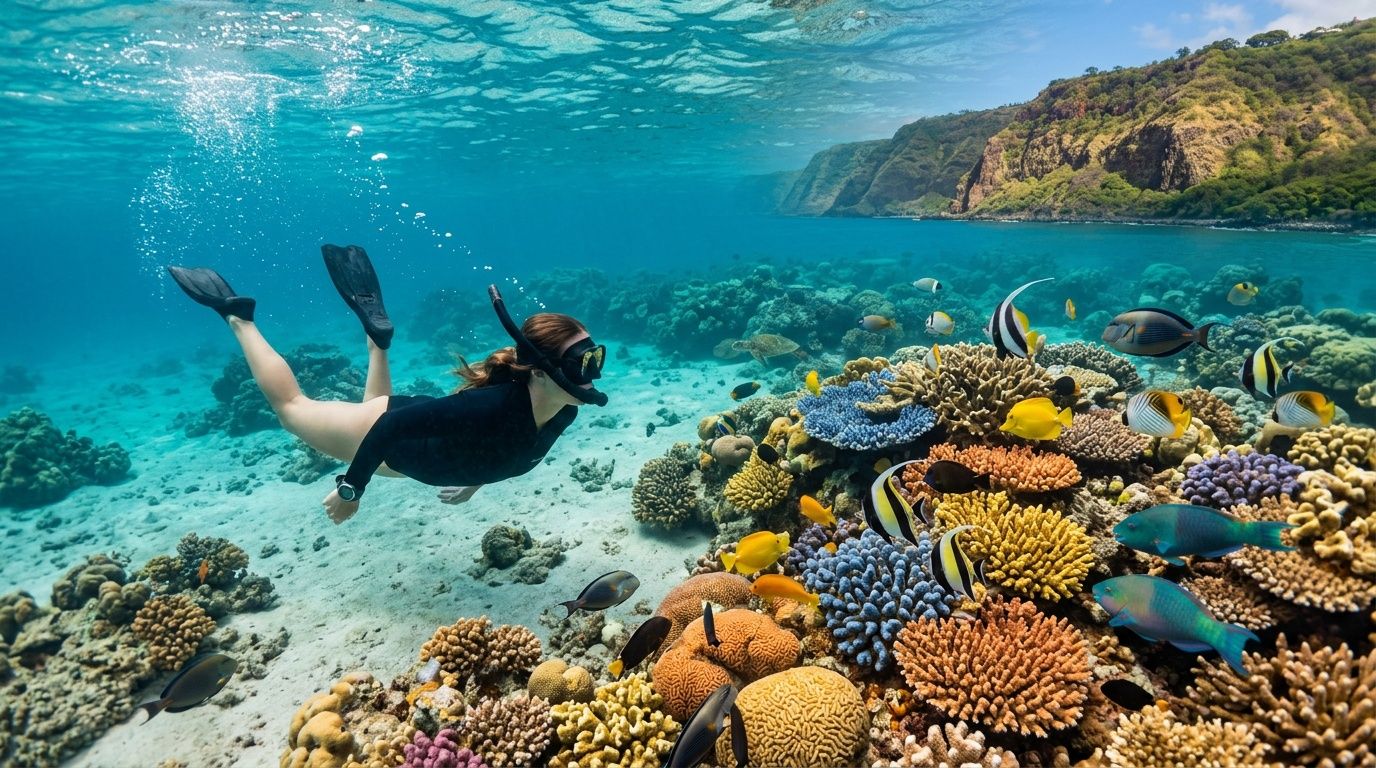
Kealakekua Bay is a marine sanctuary where spinner dolphins rest and over 600 species of reef fish congregate along a volcanic shelf that drops to 100 feet within yards of shore. The water clarity routinely exceeds 100 feet of visibility, but that transparency can deceive novice snorkelers into underestimating distance and current strength. Morning departures align with the bay's natural rhythm. Trade winds pick up after 11:00, turning glassy conditions into choppy surface water that obscures visibility and tires swimmers. Lateral currents run parallel to the monument shoreline rather than pulling swimmers offshore, but they intensify as wind speed rises. Swim with the current on your outbound leg and save energy for the return — fighting a two-knot flow for 200 yards exhausts even confident swimmers. If you feel fatigued, signal your group and rest rather than pushing through. Captain Cook snorkeling tips emphasize reef contact avoidance not as courtesy but as law. The bay operates under state marine sanctuary protections that prohibit standing on, touching, or collecting any coral or rock formations. Fire coral and spiny urchins populate ledges and crevices, delivering stings that can end your day. Maintain neutral buoyancy by adjusting your breath rather than reaching for handholds, and never chase fish into tight spaces where a fin kick might fracture centuries-old coral heads. Gear decisions matter. Reef-safe sunscreen protects both your skin and the zooxanthellae that keep coral alive — chemical formulas containing oxybenzone or octinoxate are banned statewide. A rash guard or wetsuit top eliminates reapplication and adds thermal protection during extended swims. Bring a brightly colored flotation buoy if you plan to snorkel beyond 50 yards from shore; boat traffic increases midday, and a surface marker makes you visible to incoming tours. Fins should fit snugly without cutting circulation — blisters form quickly in saltwater, and a lost fin in deep water creates a genuine safety problem. Check your mask seal on land by inhaling through your nose and ensuring suction holds it in place without the strap. Knowledge of the monument's layout helps. The bronze plaque marking Captain Cook's landing site sits on a lava rock platform at the base of a 27-foot white obelisk. The richest coral formations extend 30 to 50 yards north and south of the monument in depths ranging from 10 to 40 feet. Spinner dolphins occasionally enter the bay to rest in deeper water near the center; state guidelines require maintaining a 50-yard distance. Those applying captain cook snorkeling tips for the first time should practice equalizing ear pressure in shallow water before descending to ledges where parrotfish and surgeonfish schools congregate.
“The bay's transparency can deceive novice snorkelers into underestimating distance and current strength.”
The best arrival window is 07:00–10:00, as mornings offer the calmest water conditions and avoid stronger afternoon winds.
—
These times offer the highest water clarity and reduced wind activity for snorkeling.
75°F to 80°F
Winter brings calmer seas generally, but arrival before 10:00 remains essential to avoid afternoon wind chop.
80°F to 85°F
Summer days often feature stronger afternoon trade winds, making early morning visits necessary for safe snorkeling.
Verdict: The optimal time to visit is during the weekday morning hours of 07:00–10:00, particularly in the shoulder months of April or October when wind patterns are most predictable.
Kealakekua Bay State Historical Park is open daily to the public. Visitors may access the area during the following scheduled hours.
Access to Kealakekua Bay State Historical Park and the Captain Cook Monument does not require an entrance fee. There are no walk-up fees for the park or monument area.
Verdict: A typical adult pays 0 USD for entry, though transportation costs may apply if choosing a commercial boat tour.
Kealakekua Bay State Historical Park is located at Napo'opo'o Road, Captain Cook, HI 96704. Reaching the Captain Cook Monument directly requires either a boat excursion or hiking the Ka'awaloa Trail.
Drive to Napo'opo'o Road via Highway 11
Depart from Keauhou Bay or Kailua-Kona
Hike the Ka'awaloa Trail from the trailhead on Napo'opo'o Road
Most visitors access the snorkeling site via boat tours to avoid the steep, unshaded hike down the Ka'awaloa Trail. If driving to the trailhead, note that parking on Napo'opo'o Road is extremely limited.
Maximize your time at Kealakekua Bay with these practical strategies for gear management, environmental awareness, and navigation.
The coral density is highest along the drop-off near the Captain Cook monument, where visibility typically remains clearest. Keep a safe distance from the reef to prevent accidental contact with fragile structures.
Rental equipment may be unavailable at the bay itself, so ensure you have a properly fitted mask and snorkel. Bringing your own defogger prevents vision issues during longer sessions in the water.
Fresh water is not available at the monument site, so carry sufficient hydration in a reusable bottle. Use reef-safe sunscreen to comply with local regulations and protect the sensitive marine ecosystem.
Tidal currents can intensify near the center of the bay, making the swim back to entry points more strenuous. Monitor your energy levels and stay within the protected areas marked for snorkelers.
The Captain Cook monument is a protected historical site that sits on private land; remain in the water or on the immediate shoreline. Avoid climbing on the base of the monument or the surrounding rock walls to maintain cultural respect.
Everything you need to know about captain cook snorkeling tips
Entrance fee: 0 USD (Free entry; no walk-up fee for the park or monument.) Please note that while access is free, you are responsible for your own transportation and gear.
Following essential captain cook snorkeling tips includes staying within your comfort zone and utilizing a personal flotation device. Always check local marine conditions before entering the water near the coral reef.
The best arrival window is 07:00–10:00. Mornings offer the calmest water conditions and avoid stronger afternoon winds, making them ideal for any Kealakekua Bay snorkeling excursion.
To visit this landmark, head to Napo'opo'o Road, Captain Cook, HI 96704. Many visitors choose a boat-based Kealakekua Bay snorkel tour to reach the monument area efficiently.
The site is a protected marine life conservation district, so there are very limited facilities on-site. When planning your captain cook snorkeling tips, remember to bring enough water and sun protection as none are provided.
Bringing children to practice these captain cook snorkeling tips can be rewarding if they are strong swimmers. Always supervise young snorkelers closely due to the deep water and current variations near the white monument.
Bring high-quality masks, snorkels, fins, and reef-safe sunscreen. Protecting the vibrant aquatic ecosystem is crucial for those interested in sustainable Hawaii landmarks.
Kealakekua Bay Snorkel Tours
Read more GuideCaptain Cook Snorkeling Tours Reviews
Read more Tickets & toursBest Captain Cook Snorkel Tours
Read more Tickets & toursCaptain Cook Kayak Snorkel Tours
Read more Tickets & toursCaptain Cook Snorkel Tours from Kona
Read more Tickets & toursCaptain Cook Monument Snorkel Boat Tours
Read more